The Smoking Yard is reader supported. When you buy through links on our site, we may earn an affiliate commission. As an Amazon Associate, we earn from qualifying purchases.
Your first smoker comes with a lot of advice attached, and much of it ends in a shopping cart. Most of the gadgets on store shelves won’t change what comes off your pit.
This guide sorts smoker accessories by how much they actually matter to a beginner. We split the list into three groups: the essentials that fix real problems on your first cooks, the nice-to-have upgrades that earn their place after a few months, and the stuff you can safely skip for now. Everything we recommend is currently sold, and we based our picks on manufacturer specs and what owners report, not on hands-on testing.
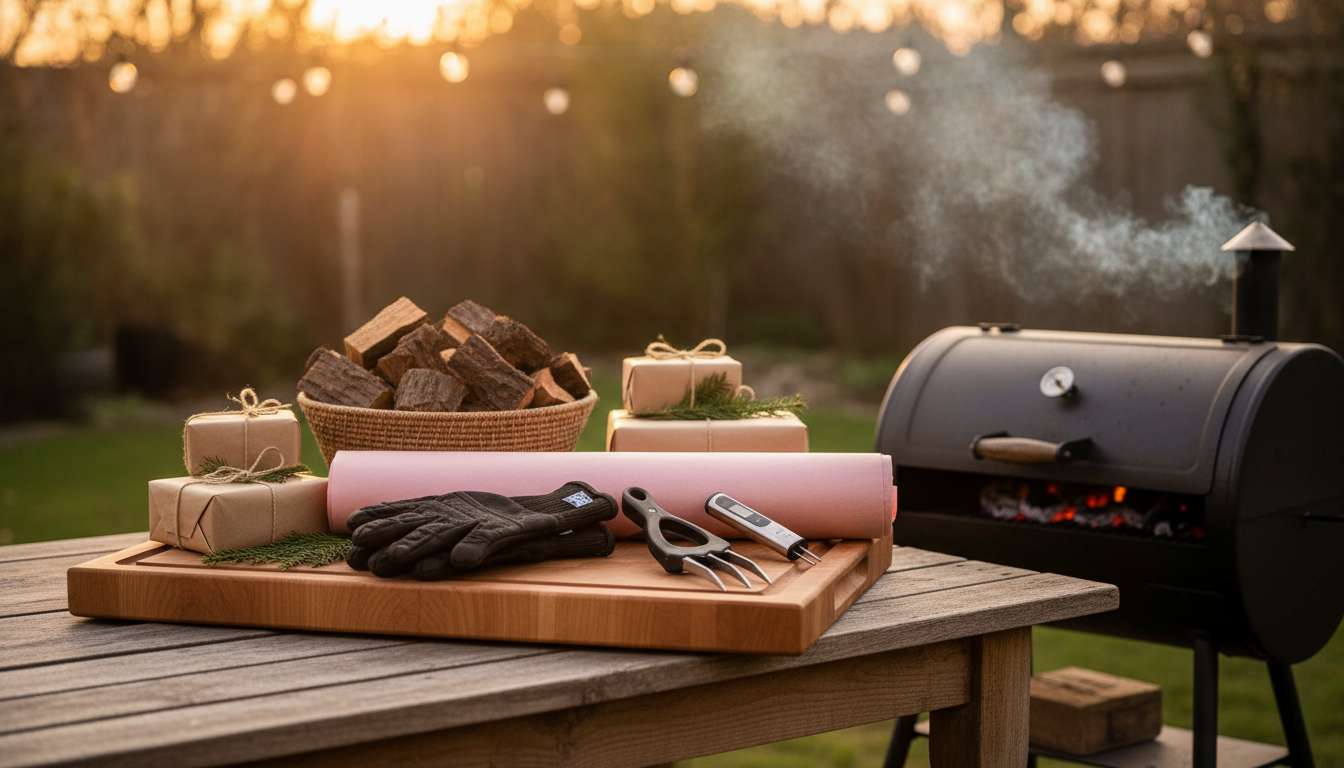
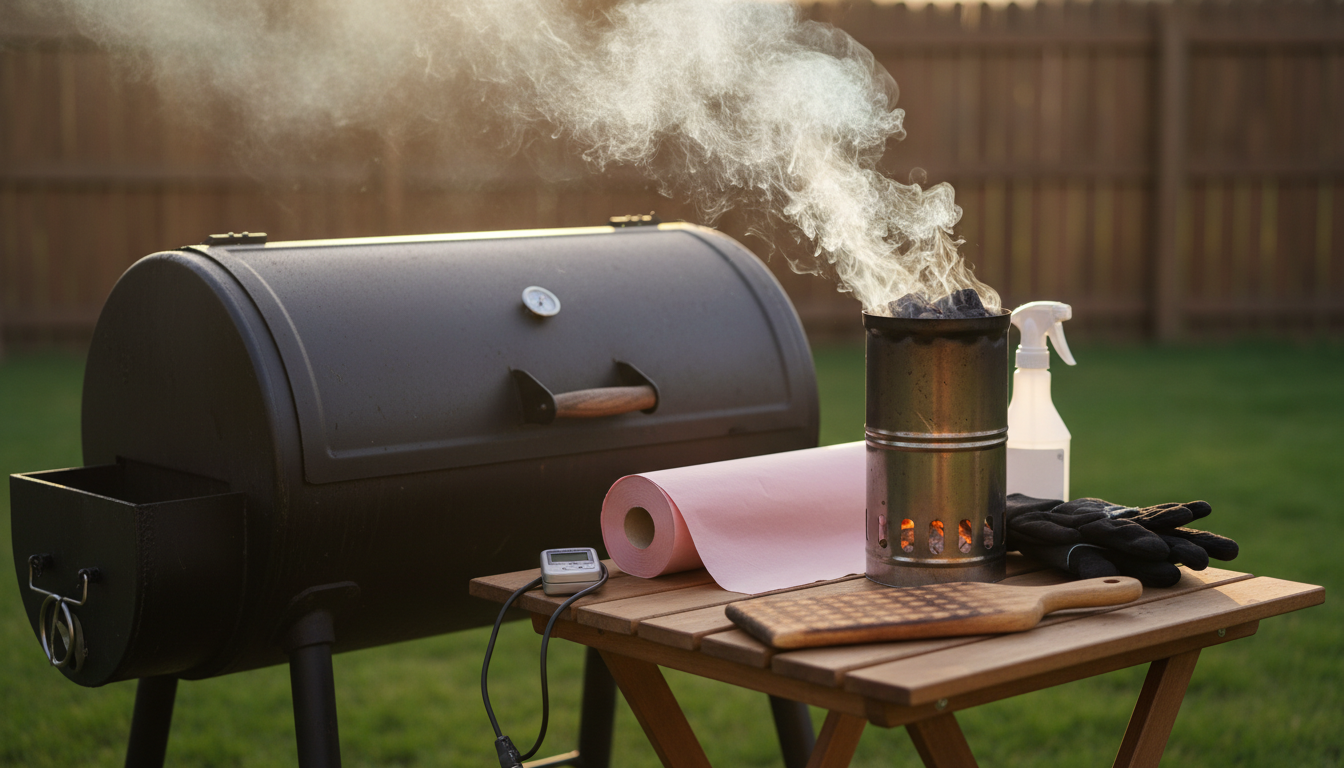
Quick Answer: Start with a leave-in probe thermometer like the ThermoPro TP829 and an instant-read thermometer like the ThermoWorks ThermoPop 2. Add a Weber Rapidfire Chimney Starter if you cook with charcoal, insulated gloves, pink butcher paper and 18-inch heavy-duty foil, a cheap spray bottle, and a bristle-free scraper like the Great Scrape Woody Paddle. A fitted cover, a sealed pellet bucket, and an ash vacuum can wait until you’ve done a few cooks.
Smoker Accessories Comparison Table
| Product | Best For | Key Specs | Approx. Price | Link |
|---|---|---|---|---|
| ThermoPro TP829 | Leave-in probe for long cooks | 4 probes, 1,000-foot wireless range, no app | Around $50 to $70 | Check price |
| ThermoWorks ThermoPop 2 | Quick doneness checks | 2 to 3 second reads, plus or minus 1°F, IP67 | Around $40 | Check price |
| Weber Rapidfire Chimney Starter | Lighting charcoal | Aluminized steel, sized for a 22.5-inch kettle | Around $25 to $35 | Check price |
| Artisan Griller Insulated Gloves | Handling hot meat | Neoprene over cotton liner, 14 inches long | Around $30 to $40 | Check price |
| Peachy’s Pink Butcher Paper | Wrapping brisket and pork | 18 inches by 175 feet, unwaxed, food grade | Around $20 to $25 | Check price |
| Reynolds Pitmaster’s Choice Foil | Fast, tight wraps | 18-inch heavy-duty foil | Around $8 to $12 | Check price |
| Food-safe spray bottle | Spritzing ribs and pork | 16 ounces, food safe | Under $10 | Check price |
| Great Scrape Woody Paddle | Bristle-free grate cleaning | Solid hardwood, grooves form to your grates | Around $30 | Check price |
| Fitted smoker cover | Weather protection | Model-specific fit from your smoker’s maker | Around $40 to $100 | Check price |
| Traeger Pellet Storage Bucket | Keeping pellets dry | Galvanized steel, holds 20 pounds | Around $15 | Check price |
| PowerSmith PAVC101 Ash Vacuum | Ash and fire pot cleanup | 3 gallons, 10 amps, metal canister and hose | Around $80 to $100 | Check price |
How We Chose
We started with the problems beginners actually hit, such as guessing when meat is done, struggling to light charcoal, and burning their hands, then picked one widely available product for each.
For each pick, we checked the manufacturer’s page or a major retailer listing to confirm it’s still sold in 2026, then compared specs, approximate prices, and recurring owner feedback. We favored simple tools with a long track record. We did not cook with these products ourselves, so treat specs as manufacturer claims and experience notes as owner reports.
Essentials: Buy These Before Your First Cook
These smoker accessories solve problems you’ll run into on day one. If your budget is tight, buy the two thermometers first.
ThermoPro TP829 Leave-In Probe Thermometer
A leave-in probe thermometer stays in the meat for the whole cook and tells you the internal temperature without opening the lid. Every lid opening dumps heat and adds time. The ThermoPro TP829 comes with four probes and a handheld receiver that, according to ThermoPro, works up to 1,000 feet away. It doesn’t need a phone app, which many beginners prefer.
You can use one probe for the meat and clip another near the grate to read the actual cooking temperature at food level.
What we like: Four probes for the price, no app to set up, and long wireless range for checking on a long cook from inside the house.
Watch out for: Some owners report the receiver battery needs frequent recharging, and a few report faulty probes (ThermoPro replaces them under warranty).
Best for: Beginners who want to stop guessing on long cooks like pork butt and brisket.
ThermoWorks ThermoPop 2 Instant-Read Thermometer
An instant-read thermometer lets you check several spots quickly, such as both ends of a brisket or each chicken thigh. ThermoWorks rates the ThermoPop 2 at 2 to 3 seconds per reading with its standard probe and accuracy of plus or minus 1°F in the cooking range that matters most. Its IP67 rating (an ingress protection rating for dust and temporary submersion) means a spill won’t kill it.
What we like: Fast readings, a rotating display, and a replaceable coin battery that ThermoWorks rates for about 4,000 hours. It costs around $40.
Watch out for: It doesn’t fold like the pricier Thermapen models, so you’ll need to keep track of the probe cover.
Best for: Spot-checking doneness in multiple places before you pull meat off the smoker.
Weber Rapidfire Chimney Starter (Charcoal Smokers)
If you cook with charcoal, a chimney starter is the cheapest way to light it evenly without lighter fluid. Fill it with charcoal, light a fire starter or newspaper underneath, and airflow gets the coals going in roughly 15 to 20 minutes. The Weber Rapidfire is the standard version: aluminized steel, a heat shield on the handle, and, according to Weber’s retail listings, enough capacity for a 22.5-inch kettle.
For low and slow smoking, many owners light a partial chimney and pour it over unlit charcoal (the Minion method) for a steadier burn.
What we like: It’s simple, durable, inexpensive (around $25 to $35), and it removes the chemical taste lighter fluid can leave behind.
Watch out for: The chimney gets extremely hot. Set it down only on a nonflammable surface like the charcoal grate or concrete, and wear gloves when you pour.
Best for: Kettle, kamado, offset, and bullet smoker owners. Pellet and electric smokers don’t need one.
Artisan Griller Insulated BBQ Gloves
Moving or shredding hot meat with bare hands is a quick way to get burned. Artisan Griller’s insulated gloves use a neoprene coating over a cotton jersey liner, and the retail listing describes them as waterproof, oil resistant, and 14 inches long, which covers part of the forearm.
What we like: Waterproof, easy to clean, and long enough to reach into a deep cook chamber. Expect to pay around $30 to $40.
Watch out for: They’re insulated for handling hot food, not for holding burning coals or a full chimney for long. The listing gives no maximum temperature rating, so keep a pair of leather or heat-rated welding gloves for fire work.
Best for: Handling and shredding hot meat, and moving foil pans and water pans.
Peachy’s Pink Butcher Paper and Reynolds Pitmaster’s Choice Foil
At some point in a long cook, the meat’s internal temperature stops climbing for hours. Pitmasters call this “the stall.” Wrapping the meat helps push through it. Pink (also called peach) butcher paper breathes a little, so the bark stays firmer. Heavy-duty foil seals tighter, so the cook goes faster but the bark softens.
For paper, look for unwaxed, uncoated, food-grade paper. Peachy’s sells an 18-inch by 175-foot roll that the retailer listing describes as unwaxed, uncoated, and 100% food grade, usually around $20 to $25. For foil, buy 18-inch heavy-duty rolls. Regular 12-inch kitchen foil is too narrow to wrap a brisket or pork butt without seams. Reynolds sells an 18-inch heavy-duty roll under its Pitmaster’s Choice label.
What we like: Both are cheap, versatile, and solve the most common beginner problem on long cooks.
Watch out for: Never use waxed paper or plastic-coated freezer paper in a smoker, because the coating can melt. Narrow foil leads to leaks and messy drippings.
Best for: Brisket, pork butt, beef ribs, and any cook that runs longer than six hours.
Check butcher paper price on Amazon
A Food-Safe Spray Bottle
A basic 16-ounce food-safe spray bottle is one of the cheapest smoker accessories you’ll own. Many pitmasters spritz ribs and pork butt with apple juice, apple cider vinegar, or water every hour or so once the bark sets. The brand doesn’t matter. Buy one labeled food safe and never use it for cleaning products.
What we like: Under $10, and it doubles as a way to calm a small flare-up on a charcoal smoker.
Watch out for: Spritzing too often lets heat escape and extends the cook. Once an hour is plenty.
Best for: Ribs, pork butt, and chicken on any type of smoker.
Great Scrape Woody Paddle (Bristle-Free Grill Cleaner)
Skip wire bristle brushes. The Centers for Disease Control and Prevention (CDC) has reported injuries from wire bristles that broke off brushes, stuck to grates, and ended up in food. A wooden scraper avoids that risk entirely.
The Great Scrape Woody Paddle is a solid hardwood paddle. Scrape it across hot grates and, according to Great Scrape, the wood wears grooves that match your grate pattern over time. Retailers list it at around $30.
What we like: No metal bristles, no replacement heads, and it works on most grate types.
Watch out for: It takes a few uses to form grooves, and it won’t clean as aggressively as a metal tool on heavy buildup. A balled-up sheet of foil held in tongs is a free backup.
Best for: Anyone cleaning grates after a cook, especially households with kids.
Nice to Have: Upgrades After Your First Few Cooks
These accessories protect your smoker and make cleanup easier. They’re worth buying once you know you’ll keep using the pit.
A Fitted Smoker Cover
A good cover keeps rain off, slows rust, and keeps pellets or charcoal dry. The best choice is usually the cover your smoker’s manufacturer makes for your exact model, since Weber, Traeger, and most other brands sell fitted covers. Loose universal covers flap in the wind and trap moisture.
What we like: It’s an inexpensive way to extend the life of a smoker that costs hundreds of dollars. Expect to pay around $40 to $100, depending on size.
Watch out for: Never cover a smoker that’s still hot. Let it cool completely first, or you can melt the cover and start a fire.
Best for: Anyone who stores the smoker outdoors without a roof over it.
Traeger Metal Pellet Storage Bucket
Wood pellets absorb moisture fast. Damp pellets swell, crumble, and can jam a pellet grill’s auger. Traeger’s galvanized metal bucket holds 20 pounds of pellets, according to Traeger, and sells for around $15. Traeger sells a lid and filter kit separately that seals the top. Any airtight, food-safe container works too, and many owners use large pet food bins.
For wood chunks, a lidded plastic tote kept off the floor does the job.
What we like: Cheap, durable, and it keeps a full bag of pellets dry between cooks.
Watch out for: The bucket alone isn’t airtight. Add the lid kit or use a sealed container in humid climates.
Best for: Pellet grill owners, especially those who store pellets in a garage or shed.
PowerSmith PAVC101 Ash Vacuum
Ash builds up in charcoal smokers, and pellet grills collect ash in the fire pot. Too much ash can choke airflow, and on a pellet grill it can cause startup problems.
The PowerSmith PAVC101 is a 3-gallon, 10-amp ash vacuum with a metal canister, a metal hose, and a fire-resistant, washable filter, according to retailer listings. Many owners use a standard shop vacuum instead, which works fine as long as the ash is completely cold.
What we like: A metal canister and hose designed for ash, and a fine filter that keeps dust from blowing back out. It typically runs around $80 to $100.
Watch out for: The listings describe it for warm and cool ash, not hot ash. Wait until the smoker has fully cooled, ideally overnight.
Best for: Pellet grill owners and anyone who smokes with charcoal every week.
Skip for Now: Accessories Beginners Don’t Need Yet
These aren’t bad products. They’re just not where your first dollars should go.
Wire Bristle Grill Brushes
As we mentioned above, loose bristles can end up in food. Bristle-free options cost about the same, so there’s no reason to start with a wire brush.
Boxed Barbecue Tool Sets
Those 20-piece kits in aluminum cases look great, but most beginners use a pair of long tongs, a spatula, and the gloves above. Buy individual tools you’ll actually reach for.
Rib Racks and Specialty Racks
Rib racks help you fit more ribs on a small smoker. Learn to cook one or two racks well first.
Meat Claws and Shredders
Insulated gloves shred pork just as well as plastic claws, and you’ll already own them.
Smoke Tubes for a Pellet Grill
Pellet tubes add extra smoke. Try a few cooks on the grill’s normal settings before deciding you need more.
Expensive Multi-Probe Wi-Fi Systems
Premium Wi-Fi thermometers with fan controllers can cost several hundred dollars. A basic wireless probe covers what a beginner needs.
Buying Guide: What Matters When You Choose Smoker Accessories
Match Accessories to Your Fuel Type
A chimney starter is essential for charcoal and useless for pellet or electric smokers. A pellet bucket matters only if you burn pellets. Before you buy anything, cross off what your smoker doesn’t use.
Prioritize Temperature Control
The biggest jump in quality for most beginners comes from knowing the real temperature of the meat and the cooking chamber. Buy thermometers before anything else, and use the United States Department of Agriculture (USDA) safe minimum internal temperature chart as your baseline: 145°F with a 3-minute rest for whole cuts of beef, pork, veal, and lamb, 160°F for ground meats, and 165°F for all poultry. Barbecue favorites like brisket and pork butt go far past those minimums (often around 195°F to 205°F) so the connective tissue breaks down and the meat turns tender.
Buy for Durability and Safety, Not Features
Steel chimneys, hardwood scrapers, and metal ash cans last for years. Choose food-safe bottles, unwaxed paper, and gloves made for the task.
Set a Realistic Budget
You can cover every essential in this guide for roughly $200 to $250 at typical prices, and most charcoal and pellet beginners can trim that further by skipping what their smoker type doesn’t need.
Frequently Asked Questions
What are the most important smoker accessories for beginners?
Thermometers come first: a leave-in probe for long cooks and an instant-read thermometer for checking doneness in several spots. After that, add gloves, butcher paper and heavy-duty foil, and a chimney starter if you use charcoal.
Do I need a separate thermometer if my smoker has a built-in dial?
Yes. Built-in lid dials usually measure air near the top of the lid, not at the grate where the food sits, and owners often find they’re off by a wide margin. A probe clipped to the grate gives a far more useful reading, and the dial never tells you the meat’s internal temperature.
Is butcher paper better than foil for wrapping?
Neither is better in every case. Butcher paper keeps the bark firmer because it lets some moisture escape. Foil speeds up the cook and keeps meat juicier, but the bark softens.
Are wooden grill scrapers safe?
Wooden scrapers avoid the loose-bristle risk the CDC has reported with wire brushes. Replace one if it cracks or splinters.
Can I use a regular shop vacuum to clean my smoker?
Yes, as long as the ash and the smoker are completely cold. Warm embers can melt a plastic canister or start a fire inside it.
How should I store wood pellets?
Keep pellets in a sealed, airtight container off the ground and away from humidity. Toss pellets that crumble or look swollen.
Final Verdict
The best smoker accessories for a beginner are the boring ones. A leave-in probe thermometer like the ThermoPro TP829 and an instant-read thermometer like the ThermoWorks ThermoPop 2 will improve your results more than any gadget on the shelf. Add insulated gloves, butcher paper and 18-inch foil, a spray bottle, and a bristle-free scraper, plus a Weber Rapidfire Chimney Starter if you burn charcoal.
Once you know you’re sticking with it, add a fitted cover, sealed pellet storage, and an ash vacuum. Leave the boxed tool kits and specialty racks on the shelf for now.