The Smoking Yard is reader supported. When you buy through links on our site, we may earn an affiliate commission. As an Amazon Associate, we earn from qualifying purchases.
Store-bought jerky costs a small fortune per bag, and most of it tastes more like sugar than beef. Making your own in a smoker fixes both problems. You pick the cut, you control the salt and spice, and you get real wood smoke in every bite.
This recipe for beef jerky in a smoker walks you through every stage: choosing a lean cut, slicing it, building a savory marinade, deciding whether to use curing salt, running the smoker, and knowing exactly when the jerky is done. It also covers the food safety step that most home recipes skip, so your jerky is both tasty and safe.
Quick Answer: Slice 3 pounds of trimmed eye of round about 1/4 inch thick, marinate it in the refrigerator for 12 to 24 hours, then smoke it at 170°F to 180°F for roughly 4 to 6 hours. Confirm with an instant-read thermometer that the meat reaches 160°F, as the US Department of Agriculture (USDA) recommends. The jerky is done when a cooled strip bends and cracks without snapping in half. Store it airtight for 1 to 2 months, or freeze it for longer.
Smoked Beef Jerky Recipe Card
- Prep time: 30 minutes active, plus 1 to 2 hours of freezing for easier slicing
- Marinating time: 12 to 24 hours in the refrigerator
- Cook time: 4 to 6 hours in the smoker (thicker slices can take longer)
- Smoker temperature: 170°F to 180°F
- Yield: About 1 to 1 1/4 pounds of jerky from 3 pounds of raw beef
- Wood: Hickory, oak, cherry, or apple
- Difficulty: Easy, with patience
Ingredients
For the Beef
- 3 pounds eye of round or top round, trimmed of all visible fat
For the Marinade
- 1/2 cup low-sodium soy sauce
- 1/4 cup Worcestershire sauce
- 1/4 cup water
- 2 tablespoons packed brown sugar
- 1 tablespoon apple cider vinegar
- 2 teaspoons coarse ground black pepper
- 1 1/2 teaspoons garlic powder
- 1 teaspoon onion powder
- 1 teaspoon smoked paprika
- 1/2 teaspoon red pepper flakes (optional, for heat)
- Optional cure: Prague Powder #1 at the manufacturer’s rate (for 3 pounds of meat, that works out to about 3/5 of a level teaspoon; see the curing section below)
Equipment
- A smoker that can hold a steady temperature between 170°F and 180°F (pellet grills, electric smokers, and well-tuned charcoal smokers all work)
- A sharp slicing knife or an electric meat slicer
- Jerky racks or wire cooling racks
- An instant-read thermometer
- A gallon zip-top bag or a nonreactive container for marinating
- Paper towels
- A vacuum sealer or airtight containers for storage
Choosing the Right Cut
Fat is the enemy of good jerky. It doesn’t dry out, it turns rancid much faster than lean muscle, and it shortens how long your jerky keeps. That’s why the best jerky cuts come from the round, the lean back leg of the steer.
- Eye of round: The top choice for most home cooks. It’s very lean, inexpensive, and shaped like a uniform log, so every slice comes out the same size.
- Top round: Just as lean and often sold as “London broil.” It’s wider, which gives you longer, broader strips.
- Bottom round: Works fine but tends to be a little tougher and carries more connective tissue.
Skip brisket, chuck, and ribeye for jerky. They taste great on a smoker, but their fat and marbling work against you here. Whatever cut you buy, trim off every bit of fat and silver skin you can see before slicing.
With the Grain or Against the Grain?
The direction you slice changes the texture of the finished jerky more than anything else in this recipe. Look closely at the raw meat and you’ll see long muscle fibers running in one direction. That’s the grain.
- Slice against the grain (across the fibers) for tender jerky that tears easily and is easy to chew. Most people prefer this, especially for kids and snacking.
- Slice with the grain (along the fibers) for the classic chewy, stringy jerky you pull apart with your teeth. It holds together well on hikes and hunting trips.
Either way, aim for slices about 1/4 inch thick. Thinner slices dry faster but can turn brittle. Thicker slices take much longer and can stay soft in the center. Consistency matters more than the exact number: strips of the same thickness finish at the same time.
Should You Use Curing Salt?
Curing salt is optional for jerky that you heat properly and eat within a few weeks, but many smokers use it. Prague Powder #1 (also called pink curing salt #1 or Insta Cure #1) is a blend of regular salt and sodium nitrite. It gives jerky a rosy color and a cured, ham-like flavor, and it adds a layer of protection against bacteria during low-temperature smoking.
Measure it carefully. Hoosier Hill Farm, a popular brand, lists its Prague Powder No. 1 as 6.25% sodium nitrite and gives a usage rate of 1 level teaspoon per 5 pounds of meat (or 1 ounce per 25 pounds). For this 3-pound batch, that means about 3/5 of a level teaspoon, or roughly 3.4 grams. The manufacturer recommends weighing both the meat and the cure on a kitchen scale, and that’s the most reliable way to get it right. Dissolve the cure completely in the marinade before adding the beef.
A few rules apply to any brand. Follow the rate on your own package, because products differ. Never substitute Prague Powder #2, which is made for long, dry-cured sausages. Never use pink Himalayan salt as a “cure,” since it contains no nitrite. Keep curing salt labeled and out of reach of children. And remember that curing salt does not replace the heating step described below.
How to Make Beef Jerky in a Smoker: Step by Step
- Trim and chill the beef. Trim all visible fat and silver skin. Wrap the roast and freeze it for 1 to 2 hours, until it’s firm but not frozen solid. Partly frozen meat is far easier to slice evenly.
- Slice the meat. Cut the chilled beef into 1/4-inch slices, against the grain for tender jerky or with the grain for chewy jerky. A meat slicer makes this fast and uniform, but a long, sharp knife works fine.
- Mix the marinade. Whisk the soy sauce, Worcestershire sauce, water, brown sugar, vinegar, pepper, garlic powder, onion powder, smoked paprika, and red pepper flakes together until the sugar dissolves. If you’re using Prague Powder #1, weigh it and stir it in until fully dissolved.
- Marinate in the refrigerator. Add the beef strips to a zip-top bag or covered container, pour in the marinade, press out the air, and massage it so every strip is coated. Refrigerate for 12 to 24 hours, turning the bag once or twice. Always marinate in the refrigerator, never on the counter.
- Drain and pat dry. Remove the strips and discard the used marinade; don’t reuse it or brush it back on. Lay the strips on paper towels and blot both sides. A dry surface takes on smoke better and speeds up drying.
- Preheat the smoker. Bring the smoker to 170°F to 180°F with your wood of choice. Hickory and oak give a bold, classic flavor; cherry and apple are milder and slightly sweet. If your smoker has a “smoke” or low setting that runs cooler than 160°F, don’t use it for this recipe.
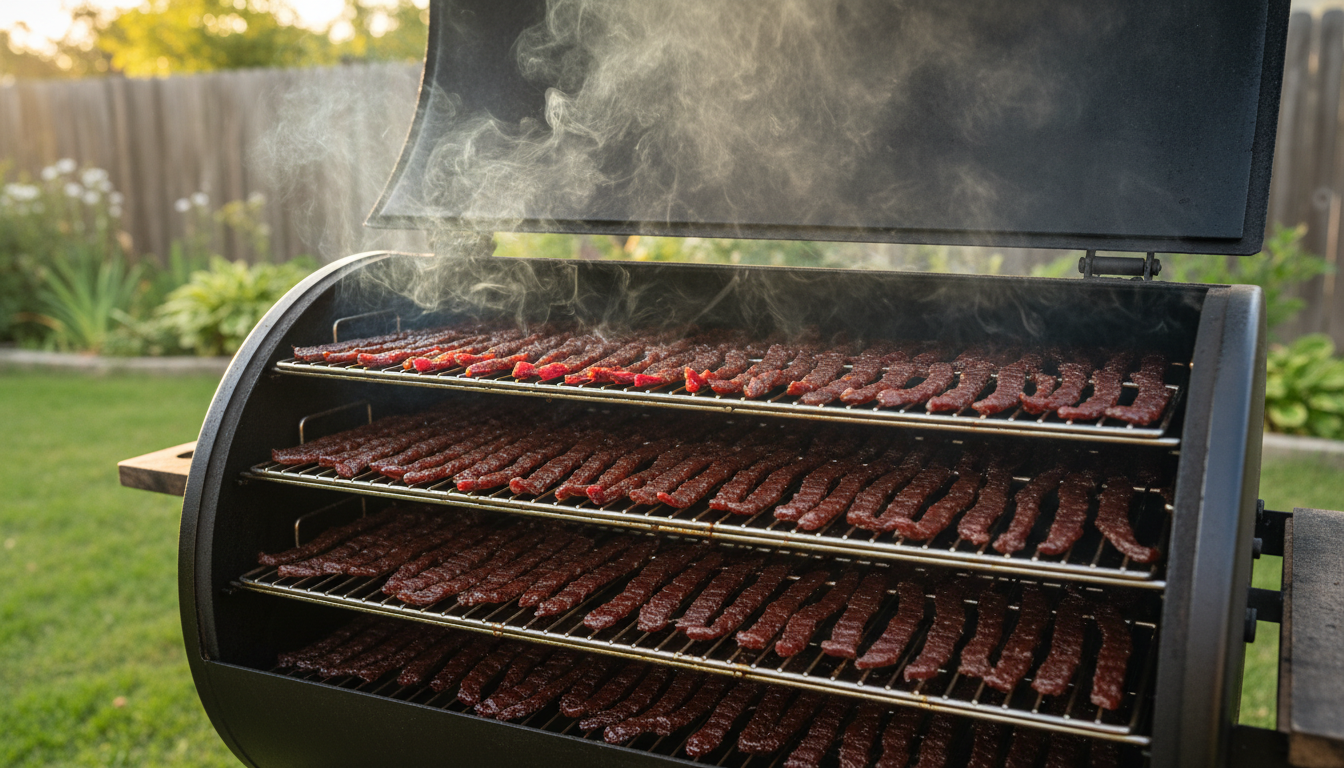
- Arrange the strips. Lay the strips in a single layer on jerky racks or wire racks, leaving a little space between them so smoke and air can move around every piece. Don’t let strips overlap, or they’ll stay wet where they touch.
- Smoke and confirm 160°F. Place the racks in the smoker and close the lid. During the first part of the cook, check the thickest strips with an instant-read thermometer (folding a strip or stacking two gives the probe more to read). The meat itself needs to reach 160°F. If it isn’t getting there, raise the smoker temperature until it does, then bring it back down to finish drying.
- Keep drying. Hold the smoker at 170°F to 180°F and let the jerky dry for a total of about 4 to 6 hours. Rotate the racks every hour or so, since most smokers have hot spots. Blot away any fat beads that appear on the surface.
- Check for doneness. Start testing at around the 3 1/2 hour mark. Pull a strip, let it cool for 5 minutes, then bend it. Finished jerky bends and cracks on the surface but doesn’t snap in two. Remove strips as they finish; thin ones will be ready before thick ones.
- Cool and condition. Let the jerky cool completely on the racks. Then place it loosely in a zip-top bag for a day. If you see moisture beading inside the bag, the jerky needs more drying time.
How to Tell When Smoked Beef Jerky Is Done
Time and temperature give you a starting point, but humidity, slice thickness, and your smoker all change how long jerky takes. Use these checks instead of the clock:
- The bend test: A cooled strip bends to about 90 degrees and shows small white cracks along the bend, but it doesn’t break. If it snaps cleanly, it’s overdried (still safe, just crunchy).
- The tear test: Tear a strip in half. The inside should look dry and fibrous with no shiny, raw-looking, or wet center.
- The feel: The surface feels dry and leathery, not tacky. A little surface oil is normal; moisture is not.
Always judge a strip after it cools. Warm jerky feels softer than it really is, which leads a lot of beginners to overdry the whole batch.
Food Safety Notes
Jerky cooks at very low temperatures, and that’s exactly where harmful bacteria such as Salmonella and E. coli can survive if you’re careless. The USDA Food Safety and Inspection Service (FSIS) offers clear guidance in its Jerky and Food Safety fact sheet. The key points:
- Heat beef to 160°F. The USDA recommends heating meat to 160°F (and poultry to 165°F) before dehydrating, by steaming or roasting, and checking it with a food thermometer. It notes that a dehydrator may not reach these temperatures on its own. In a smoker, verify with your thermometer that the strips themselves reach 160°F; if you can’t confirm it, follow the USDA’s method and steam or roast the marinated strips to 160°F before they go into the smoker.
- Keep the drying temperature up. The USDA advises holding at least 130°F to 140°F throughout drying. Our 170°F to 180°F range gives you a comfortable margin.
- Marinate cold and toss the marinade. Marinate in the refrigerator, and discard used marinade. Marinating does not make raw meat safe.
- Keep everything clean. Wash hands, knives, cutting boards, and slicer parts in hot, soapy water after they touch raw meat.
- Don’t rely on curing salt alone. Prague Powder #1 helps, but it doesn’t replace reaching 160°F.
If you hunt and want to make venison jerky, read the full USDA page first; wild game has its own considerations.
How to Store Homemade Jerky
The USDA says home-dried jerky keeps about 1 to 2 months, compared with about 12 months for commercially packaged jerky. To get the most life out of your batch:
- Let it cool completely and blot off surface oil before packing it.
- Store it in airtight containers or vacuum-sealed bags, away from heat and light.
- Refrigerate it for better quality over time, or freeze portions you won’t eat within a month or two.
- Throw out any jerky that shows mold, smells off, or feels damp or slimy.
Vacuum sealing is the best upgrade here. Removing the air slows the fats from going rancid and keeps the jerky from picking up moisture or fridge odors. Split the batch into snack-size packs so you only open what you’ll eat.
Recommended Gear for Smoker Jerky
You don’t need special equipment to make great jerky, but a few tools make the job faster and more consistent. We chose these based on manufacturer specs, retailer listings, and published owner reviews; we have not tested them ourselves. Prices are approximate and change often.
| Product | Best For | Key Specs | Approx. Price | Link |
|---|---|---|---|---|
| LEM Jerky Rack and Pan | Holding strips in a single layer | 18 x 13 inch stainless steel rack, 1/2-inch grid, stacks 2 to 4 high; sold with 1 or 3 racks | Around $18 to $47, depending on the set | Check price on Amazon |
| Chefman Die-Cast Electric Deli Slicer | Even 1/4-inch slices | 7.5-inch serrated stainless steel blade, 180-watt motor, adjustable thickness dial | Around $40 | Check price on Amazon |
| ThermoPro TP19H Instant-Read Thermometer | Confirming 160°F | 3 to 4 second readings, ±0.9°F accuracy, 58°F to 572°F range, splash resistant | Around $18 to $25 | Check price on Amazon |
| Nesco VS-12 Deluxe Vacuum Sealer | Long-term storage | 130-watt double vacuum pump, dry, moist, and double seal settings, built-in bag cutter | Around $100 to $150 | Check price on Amazon |
| Hoosier Hill Farm Prague Powder No. 1 | Optional curing | 6.25% sodium nitrite; 1 level teaspoon per 5 pounds of meat per the manufacturer | Around $13 for a 1-pound jar | Check price on Amazon |
Why These Tools Matter
Jerky racks: LEM’s stainless steel rack has a tight 1/2-inch grid, so thin strips don’t sag through the grates, and the racks stack to fit more jerky into a small smoker. Any oven-safe wire cooling rack works in a pinch.
Meat slicer: Owners report that budget slicers like the Chefman handle partly frozen lean beef well, and an adjustable thickness dial keeps every strip the same. It’s the single biggest help for consistent drying times. Clean it thoroughly after raw meat.
Thermometer: An instant-read thermometer is the one tool we consider essential, because it’s the only way to confirm the 160°F food safety target. The ThermoPro TP19H carries an ingress protection rating of IP65, which means it resists dust and splashing water, and it costs far less than premium models.
Vacuum sealer: The Nesco VS-12 offers a gentle vacuum setting and a pulse control, which helps keep sharp jerky edges from crushing or poking through the bag.
Flavor Variations
Once you’ve nailed the base recipe, the marinade is easy to change up. Keep the liquid amounts about the same and swap the seasonings:
- Teriyaki: Replace the Worcestershire with pineapple juice and add 1 teaspoon of ground ginger.
- Sweet and spicy: Add 1 tablespoon of sriracha and an extra tablespoon of brown sugar.
- Cracked pepper: Cut the sugar in half and press extra coarse black pepper onto the strips right before smoking.
- Chipotle lime: Add 1 teaspoon of chipotle powder and the juice of one lime.
Frequently Asked Questions
What temperature should I smoke beef jerky at?
Aim for 170°F to 180°F. That’s warm enough to bring the meat to the USDA’s 160°F target and dry it steadily, but low enough that the strips dry instead of cooking into tough, crumbly pieces.
How long does it take to smoke beef jerky?
Usually 4 to 6 hours for 1/4-inch slices at 170°F to 180°F. Thicker slices, humid weather, or a crowded smoker can push it longer. Use the bend test, not the clock, to decide when it’s done.
Do I have to use curing salt for smoked beef jerky?
No. Jerky heated to 160°F, dried properly, and eaten within a couple of months is fine without it. Curing salt adds color, a cured flavor, and extra protection during low and slow smoking. If you use it, follow the manufacturer’s rate exactly.
What’s the best wood for smoking jerky?
Hickory and oak give a strong, traditional jerky flavor. Cherry and apple are milder and add a little sweetness. Mesquite works but can taste harsh over a long cook, so use it sparingly or blend it with a milder wood.
Can I make jerky on a pellet grill?
Yes. Pellet grills hold steady low temperatures well, which makes them a good fit for jerky. Just check that your model can hold 170°F to 180°F; some “smoke” settings run cooler than that, and you need the meat to reach 160°F.
Why is my jerky tough?
Tough jerky usually comes from slicing with the grain, cutting too thick, or overdrying. Slice against the grain for a tender bite, and start checking for doneness earlier on your next batch.
Final Thoughts
Smoked beef jerky comes down to a few simple habits: start with a lean cut like eye of round, slice it evenly, marinate it cold, and smoke it low while confirming the meat reaches 160°F. Judge doneness with the bend test, store it airtight, and eat it within a couple of months. After your first batch, you’ll have a reliable base recipe you can tweak with new woods and marinades every time you fire up the smoker.