The Smoking Yard is reader supported. When you buy through links on our site, we may earn an affiliate commission. As an Amazon Associate, we earn from qualifying purchases.
Good jerky asks for something most smokers aren’t built to do: hold a low, steady heat for hours while moving enough air to dry thin strips of meat. A smoker that is perfect for brisket at 250°F can turn jerky brittle, case hardened, or unevenly dried if it can’t idle down near 160°F.
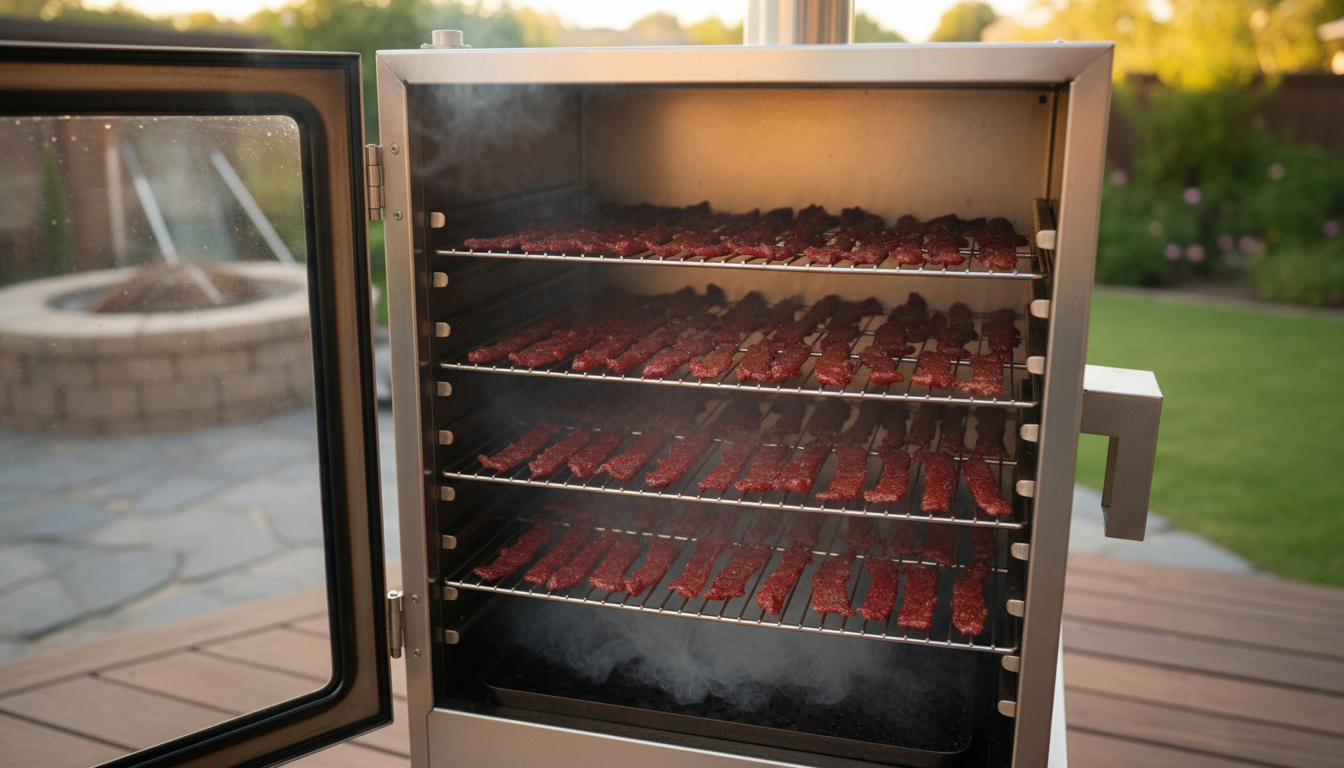
The best smoker for jerky depends on how you like to cook. Electric cabinets give you the most control at low temperatures, propane smokers work anywhere you can carry a tank, pellet grills add convenience and wood flavor, and a dehydrator paired with a smoke tube is the cheapest way to start. This guide compares seven options across every major fuel type and explains the specs that actually matter for drying meat.
If you already know you want a vertical pellet cabinet, our guide to the best vertical pellet smokers covers that category in depth. Here we include one cabinet pellet pick and focus on the alternatives.
Quick Answer: The Masterbuilt 30-Inch Digital Electric Smoker is the best jerky smoker for most people because it starts at 100°F and costs around $250. The Smokin-It Model #2 is the best buy-it-for-life electric option, the Bradley 4-Rack Digital Smoker is best for hands-off smoke, and the Camp Chef XXL Pro Wi-Fi is the best pellet cabinet for jerky. On a tight budget, a Nesco Snackmaster Pro dehydrator plus an A-MAZE-N smoke tube gets you started for around $120.
Best Jerky Smokers Compared
| Product | Best For | Key Specs | Approx. Price | Link |
|---|---|---|---|---|
| Masterbuilt 30-Inch Digital Electric Smoker | Best overall | 100°F to 275°F, 4 racks, 710 square inches | Around $250 | Check price |
| Smokin-It Model #2 | Best premium electric | 100°F to 250°F, 4 stainless racks, 35-pound capacity | Around $800 to $850 | Check price |
| Bradley 4-Rack Digital Smoker | Hands-off smoke | Up to 280°F, 4 racks, automatic bisquette feeder | Around $500 to $630 | Check price |
| Camp Chef XXL Pro Wi-Fi | Vertical pellet cabinet | 150°F to 350°F, 3 jerky racks plus meat and sausage racks | Around $1,500 | Check price |
| Traeger Ironwood | Horizontal pellet grill | 165°F to 500°F, 650 square inches, Super Smoke | Around $1,300 | Check price |
| Masterbuilt MPS 230S Propane Smoker | Propane and off-grid | 4 racks, 730 square inches, 15,400 BTU burner | Around $250 | Check price |
| Nesco Snackmaster Pro plus A-MAZE-N tube | Budget combo | 95°F to 160°F, 5 trays (expands to 12), 4-hour smoke tube | Around $120 for both | Check price |
Prices change often, especially around holidays and end-of-season sales, so check the current price before you buy.
How We Chose
We did not test these smokers ourselves. We built this list from manufacturer specifications, current retailer listings, and owner reports, then compared models on the factors that matter most for jerky:
- Low temperature floor: jerky dries best with a smoker temperature around 150°F to 170°F, so we favored models that can hold that range or close to it.
- Rack count and rack area: more racks mean bigger batches in one session.
- Airflow: moisture has to leave the cabinet, or strips steam instead of drying.
- Jerky accessories: fine mesh racks, mats, or hanging hooks keep thin strips from falling through grates.
- Fuel type variety: we picked one strong option for each fuel type so you can match the smoker to your setup.
- Availability: every product was listed for sale by the manufacturer or a major retailer at the time of writing.
The Best Smokers for Making Jerky
1. Masterbuilt 30-Inch Digital Electric Smoker: Best Overall
The Masterbuilt 30-Inch Digital Electric Smoker (model MB20071117) is the most common recommendation for new jerky makers, and the specs explain why. Masterbuilt lists a temperature range of 100°F to 275°F, four chrome-coated racks, and 710 square inches of cooking space. That low floor lets you dry strips in the 150°F to 170°F zone without fighting the controller. The side wood chip loader lets you add chips without opening the door, which keeps heat and humidity stable.
What we like: A true low temperature floor, four racks for a big batch, and a price that usually sits around $250.
Watch out for: Owners report that the wood chip tray needs frequent refills for continuous smoke. Masterbuilt’s own store showed this model out of stock at the time of writing, though retailers still listed it, so check availability.
Best for: First-time jerky makers who want low and steady heat for the least money.
2. Smokin-It Model #2: Best Premium Electric
The Smokin-It Model #2 is a heavy stainless steel box built in the style of commercial electric smokers. Based on retailer specs, it runs from 100°F to 250°F, holds up to 35 pounds of meat on four stainless steel racks, and uses an 800-watt element with fiberglass insulation and a double-latch door. The cabinet is also NSF certified (meaning it meets National Sanitation Foundation standards for restaurant use). For smoke, you load wood chunks into a small box that sits near the heating element.
What we like: Thick insulation, a 100°F floor, and stainless construction that owners report lasting for many years.
Watch out for: It costs around $800 or more and weighs well over 80 pounds. The analog dial controller doesn’t offer app control or a digital readout, so you’ll want a separate thermometer.
Best for: Serious jerky, sausage, and snack stick makers who want one smoker for decades.
3. Bradley 4-Rack Digital Smoker: Best Hands-Off Smoke
Bradley smokers use compressed wood pucks called bisquettes that feed automatically onto a burner. Retailer listings say each bisquette burns for about 20 minutes, and Bradley says you can go up to 9 hours without adding wood. The digital controller tops out at 280°F, and Bradley notes that the minimum temperature depends on outdoor conditions, which works in your favor for jerky because the unit can idle very low. Inside, you get four removable racks that each measure 11 by 13 inches.
What we like: Steady, automatic smoke with no chip trays to refill, plus a low idle that suits jerky, fish, and cheese.
Watch out for: You must buy Bradley bisquettes, which adds ongoing cost. Bradley lists it at around $630, and its store said new inventory was on the way at the time of writing.
Best for: Cooks who want consistent smoke flavor without babysitting a wood tray.
4. Camp Chef XXL Pro Wi-Fi: Best Vertical Pellet Smoker for Jerky
If you want wood pellet convenience in a cabinet, the Camp Chef XXL Pro Wi-Fi is the most jerky-ready model we found. Based on Camp Chef and retailer listings, it ships with three jerky racks, three meat racks, and a hanging sausage rack, and its controller runs from 150°F to 350°F with Wi-Fi app control. We cover it and four other cabinet pellet smokers in our vertical pellet smoker roundup, so check that guide for the full breakdown.
What we like: Dedicated jerky racks in the box and app control for long, low drying sessions.
Watch out for: It costs around $1,500, and Camp Chef’s own store listed it as unavailable at the time of our earlier review, though major retailers still had stock.
Best for: Pellet fans who make jerky and sausage in large batches.
5. Traeger Ironwood: Best Horizontal Pellet Grill for Jerky
Most horizontal pellet grills bottom out around 180°F, which is a little hot for jerky. The Traeger Ironwood starts lower. Traeger lists a range of 165°F to 500°F, 650 square inches across two grate levels, a 20-pound hopper with a pellet level sensor, and a Super Smoke mode that boosts smoke output with one button. That means the same grill can dry jerky on Saturday and sear steaks on Sunday.
What we like: A 165°F floor, Super Smoke for stronger flavor at low heat, and full grilling range when you are not making jerky.
Watch out for: At around $1,300, you pay for grilling features you don’t need for jerky. Two grate levels hold fewer strips than a four-rack cabinet, so add jerky mats or a stacking rack for bigger batches.
Best for: Cooks who want one pellet grill that handles jerky and everyday grilling.
6. Masterbuilt MPS 230S Propane Smoker: Best Propane Option
Propane makes sense if you don’t have an outdoor outlet or want to smoke at camp. The Masterbuilt MPS 230S is a two-door vertical propane smoker with four chrome-coated racks, 730 square inches of space, and a 15,400 British thermal unit (BTU) stainless steel burner. The two-door design lets you add wood chips and water without opening the main cooking chamber.
What we like: Big capacity for around $250, no outlet required, and a separate door for chips and water.
Watch out for: Masterbuilt doesn’t publish a minimum temperature for this model. Propane smokers generally run hotter at their lowest setting than electric units, so plan on keeping the burner low, opening the vents, and checking a separate thermometer. Wind and hot weather make low temperatures harder to hold.
Best for: Off-grid smokers, hunters, and anyone who wants a big propane cabinet for occasional jerky.
7. Nesco Snackmaster Pro Dehydrator Plus A-MAZE-N Tube Smoker: Best Budget Combo
You don’t need a dedicated smoker to make smoky jerky. The Nesco Snackmaster Pro (FD-75PR) is a 600-watt dehydrator with an adjustable range of 95°F to 160°F, five trays out of the box, and room to expand to 12 trays. Nesco includes a sample of jerky seasoning and cure. Pair it with the A-MAZE-N 12-inch tube smoker, a stainless steel tube that burns wood pellets for up to 4 hours and works in almost any grill.
The usual approach looks like this: smoke the marinated strips with the lit tube in a covered grill, heat the meat to 160°F, then finish drying in the dehydrator. That order matches the US Department of Agriculture (USDA) advice to bring beef to 160°F before dehydrating, since many dehydrators can’t heat meat that high on their own.
What we like: The lowest cost on this list at around $100 for the dehydrator and $20 for the tube, plus airflow designed specifically for drying.
Watch out for: It takes two steps and two pieces of gear. Some owners report that their dehydrators run a few degrees below the dial setting, so check with a thermometer.
Best for: Beginners and apartment dwellers testing the jerky hobby before buying a smoker.
Check price on Amazon (Nesco) | Check price on Amazon (A-MAZE-N tube)
Jerky Smoker Buying Guide
Low Temperature Floor
This is the spec that matters most. Most jerky recipes call for a smoker temperature between about 150°F and 170°F, which dries strips evenly without cooking the outside hard before the inside dries. Electric cabinets like the Masterbuilt and Smokin-It start at 100°F, the Camp Chef XXL Pro starts at 150°F, and the Traeger Ironwood starts at 165°F. Many horizontal pellet grills and propane smokers can’t hold much below 180°F to 200°F, which still works but dries faster and less evenly.
Food Safety Comes First
A low smoker temperature is not the same as safe meat. The USDA recommends heating beef to 160°F and poultry to 165°F, measured with a food thermometer, and then drying at a steady 130°F to 140°F or higher. The USDA also says home-dried jerky keeps for 1 to 2 months. Read the USDA jerky and food safety guide before your first batch, and follow our step-by-step beef jerky recipe for the smoker for marinade, slicing, and timing.
Rack Count and Spacing
More racks mean more jerky per session. Four racks is a good minimum for a cabinet smoker, and a 2-pound to 3-pound batch of sliced beef can fill most of them. Leave a little space between strips so air can circulate. Racks closest to the heat dry faster, so rotate them every hour or two.
Airflow and Moisture Control
Jerky is drying, not just smoking. If moist air stays trapped in the cabinet, the strips steam and turn soft or rubbery. Open the top vent fully, skip the water pan or leave it empty, and avoid opening the door more than you need to. Dehydrators handle this best because their fans push air across every tray, while electric cabinets with adjustable top vents come next.
Jerky Racks and Accessories
Standard grates have gaps wide enough for thin strips to droop or fall through. Look for smokers that include fine mesh jerky racks (like the Camp Chef XXL Pro), or budget for nonstick jerky mats, stainless mesh racks, or hanging skewers. A dual probe thermometer is also worth buying, since built-in dials can read high or low. Our list of smoker accessories every beginner needs covers the essentials.
Fuel Type and Flavor
Electric smokers give the tightest control at low temperatures but need wood chips for flavor; see our guide to the best wood chips for electric smokers for hickory, mesquite, and fruitwood picks. Propane gives you portability but runs hotter at the bottom of its range. Pellet grills add convenience and steady smoke, and a smoke tube can boost flavor in any of them. If you are torn between fuel types, our propane vs electric smoker comparison walks through the tradeoffs.
Related Guides
- Best Electric Smokers for Beginners (2026)
- Vertical Smoker vs Pellet Grill: Which Fits Your Cooking?
- Pellet Smoker vs Electric Smoker: Which Should You Buy?
- Best Pellet Smokers Under $500 (2026)
Frequently Asked Questions
What temperature should I smoke jerky at?
Most cooks run the smoker between 150°F and 170°F. Whatever setting you use, make sure beef reaches 160°F and poultry reaches 165°F internally, as the USDA recommends.
What type of smoker is best for jerky?
An electric cabinet smoker is the easiest choice because it holds low temperatures steadily and costs less than most pellet smokers. Vertical pellet cabinets and low-floor pellet grills also work well, and propane smokers work if you can keep the temperature down.
How long does jerky take in a smoker?
Most batches take about 4 to 6 hours at 160°F to 170°F, depending on slice thickness, humidity, and how full the racks are. Start checking at the 3-hour mark. Finished jerky bends and cracks without snapping in half.
Can I make jerky on a regular pellet grill?
Yes, but check the lowest setting first. Many pellet grills bottom out near 180°F, which dries jerky faster and can make it brittle. A grill with a lower floor, like the Traeger Ironwood at 165°F, gives you more control.
Do I need a cure for smoked jerky?
A cure is optional for jerky that you heat to a safe temperature and eat within a few weeks, but many cooks add one for color, flavor, and an extra margin of safety during low-temperature smoking. Follow the cure maker’s measurements exactly.
Is a dehydrator better than a smoker for jerky?
A dehydrator dries more evenly thanks to its fan, but it can’t add smoke flavor by itself. A smoker adds flavor and can bring meat to a safe temperature in one step. The dehydrator and smoke tube combo above gives you both for the lowest price.
Final Verdict
For most people, the Masterbuilt 30-Inch Digital Electric Smoker is the best smoker for jerky: it starts at 100°F, holds four racks, and costs around $250. If you want a smoker that lasts decades, the Smokin-It Model #2 is worth the higher price, and the Bradley 4-Rack Digital Smoker suits cooks who want automatic smoke. Pellet fans should pick the Camp Chef XXL Pro Wi-Fi for a cabinet or the Traeger Ironwood for a do-everything grill. Whichever you choose, use a reliable thermometer and follow USDA temperatures so every batch is safe.
Leave a Reply