The Smoking Yard is reader supported. When you buy through links on our site, we may earn an affiliate commission. As an Amazon Associate, we earn from qualifying purchases.
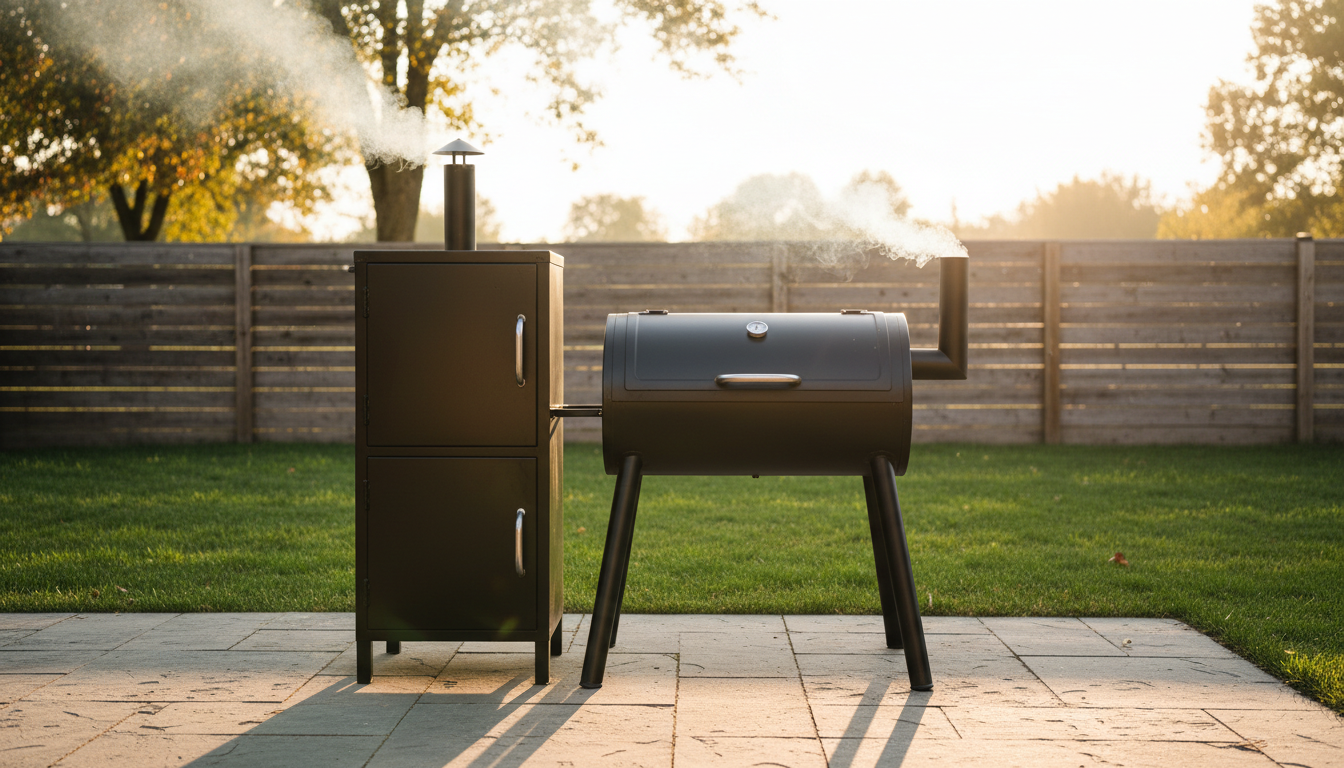
One cooker stands tall like a narrow cabinet with stacked racks. The other sits low and wide on a cart, with a pellet hopper on the side. Both make excellent barbecue, but they solve different problems.
If you are weighing a vertical smoker vs pellet grill, the real question is what you cook most. Vertical smokers pack a lot of rack space into a small footprint and shine with low temperature jobs like jerky, sausage, and fish. Pellet grills trade some capacity for range: they smoke low and slow, then crank up hot enough to roast chicken or grill a burger.
Below, we compare both on capacity, searing, temperature range, fuel, ease of use, and price, using manufacturer specs and owner reviews, then suggest models on each side.
Quick Answer: Choose a vertical smoker if you want maximum smoking capacity on a small patio, or you plan to make jerky, sausage, and smoked fish in batches. The Pit Boss Pro Series II 4-Series Vertical Pellet Smoker gives you pellet convenience in a tower, and the Weber Smokey Mountain Cooker is the charcoal classic. Choose a pellet grill if you want one cooker that smokes and grills. The Pit Boss 850FB2 sears best for the money, and the Traeger Woodridge is the most polished all-rounder.
Vertical Smokers vs Pellet Grills: Our Picks Compared
| Product | Type | Best For | Key Specs | Approx. Price | Link |
|---|---|---|---|---|---|
| Pit Boss Pro Series II 4-Series | Vertical pellet smoker | Big batches with set-and-forget pellets | 1,077 square inches, 4 racks, 65-pound hopper, 130°F to 420°F | Around $400 to $600 | Check price on Amazon |
| Masterbuilt 30-Inch Digital Electric Smoker | Vertical electric smoker | Jerky, fish, and beginners on a budget | 710 square inches, 4 racks, 800 watts, 100°F to 275°F | Around $250 | Check price on Amazon |
| Masterbuilt Two-Door 30-Inch Propane Smoker | Vertical propane smoker | Cooking away from an outlet | 730 square inches, 4 racks, 15,400 BTU burner | Around $250 | Check price on Amazon |
| Weber Smokey Mountain Cooker 18″ | Vertical charcoal smoker | Classic charcoal flavor | 481 square inches, 2 grates, water pan | Around $400 to $450 | Check price on Amazon |
| Traeger Woodridge | Pellet grill | Polished all-rounder with app control | 860 square inches, up to 500°F, 24-pound hopper, Wi-Fi | Around $900 | Check price on Amazon |
| Z Grills 700D4E | Pellet grill | Budget smoking and roasting | 697 square inches, 180°F to 450°F, 20-pound hopper | Around $600 to $800 | Check price on Amazon |
| Pit Boss 850FB2 | Pellet grill | Searing on a pellet grill | 840 square inches, 180°F to 500°F, flame broiler up to 1,000°F | Around $600 | Check price on Amazon |
Prices change often, so treat these as rough ranges and check the current price before you buy.
What Is the Difference Between a Vertical Smoker and a Pellet Grill?
A vertical smoker is a tall, cabinet or bullet shaped cooker with the heat source at the bottom and food on stacked racks above it. Heat and smoke rise through the food and exit near the top. It can run on electricity, propane, charcoal, or wood pellets.
A pellet grill is a horizontal cooker that burns compressed hardwood pellets. An auger feeds pellets from a hopper into a small fire pot, a fan feeds the fire, and a digital controller adjusts the feed rate to hold your set temperature.
A third option blurs the line: the vertical pellet smoker. It uses the same hopper, auger, and controller as a pellet grill but stacks the racks in a tower. If you are comparing a vertical pellet smoker vs pellet grill specifically, the fuel and convenience are the same, so the decision comes down to capacity versus grilling ability.
Capacity and Footprint
Capacity is where vertical smokers win clearly. Because they build up instead of out, they fit a lot of rack space into a small patio footprint. The Pit Boss Pro Series II 4-Series offers 1,077 square inches across four racks, according to Pit Boss, while the Masterbuilt 30-inch electric and two-door propane models each offer just over 700 square inches.
Pellet grills spread their space across a main grate and an upper warming rack. The Traeger Woodridge lists 860 square inches, but 340 of those sit on the second rack, according to Traeger. That upper rack works for wings or sausages, but a full packer brisket or a few racks of ribs need the main grate, so usable capacity for big cuts is lower than the headline number suggests.
Smoke Only vs Grill and Smoke (Searing)
This is the biggest practical difference. Most vertical smokers are smoke-only machines. The Masterbuilt digital electric tops out at 275°F, according to Masterbuilt, so it cannot grill a steak or crisp chicken skin. Charcoal and propane verticals run hotter but keep food far from the heat, so they still do not sear well.
Pellet grills can smoke and grill, though searing is their weak spot. Many top out around 450°F to 500°F with indirect heat. Reviewers at Smoked BBQ Source found that burgers cooked on the Z Grills 700D4E at 450°F came out without real char or grill marks. The fix is a model with direct flame access. The Pit Boss 850FB2 has a slide plate flame broiler that, according to Pit Boss, exposes food to direct flame at up to 1,000°F. A cast iron pan also helps on any pellet grill.
Bottom line: If you want one cooker for brisket on Saturday and burgers on Tuesday, buy a pellet grill. If you already own a gas or charcoal grill, a vertical smoker complements it well.
Temperature Range
Temperature range decides what you can cook. Here is how our picks compare, based on manufacturer specs and reputable reviews:
- Masterbuilt 30-inch digital electric: 100°F to 275°F
- Pit Boss Pro Series II 4-Series vertical pellet: 130°F to 420°F
- Z Grills 700D4E: 180°F to 450°F
- Pit Boss 850FB2: 180°F to 500°F, plus the flame broiler
- Traeger Woodridge: up to 500°F
Vertical smokers reach lower, which helps with jerky, fish, and cheese. Pellet grills reach higher, which helps with crisp chicken skin, baking, and pizza.
Jerky, Sausage, and Fish Suitability
Vertical smokers are the better tool for jerky, sausage, and fish. The stacked racks let you lay out several pounds of jerky strips or fish fillets in a single layer, and hanging rods or hooks (sold as accessories for many models) let you hang sausage links in the smoke.
You can make all three on a pellet grill, but you will run out of grate space faster, and the higher minimum temperature on many models (often 180°F) gives you less control at the low end. If jerky is your goal, our step-by-step beef jerky recipe for smokers covers the process on either type.
Whatever you smoke, food safety comes first. The US Department of Agriculture (USDA) recommends heating beef jerky to 160°F and poultry jerky to 165°F before or during drying, and cooking fish to 145°F. Ground meat sausages should reach 160°F (165°F for poultry sausages). See the USDA jerky guidance and the USDA safe temperature chart for details.
Fuel Options and Flavor
Pellet grills run on one fuel: hardwood pellets. That gives you a clean smoke flavor and easy wood swaps, though some cooks find it lighter than charcoal.
Vertical smokers give you a choice of fuel, and each has a different flavor and effort level:
- Electric: the easiest to run, with wood chips for smoke. Flavor is the mildest of the group. Our pellet smoker vs electric smoker comparison goes deeper on this tradeoff.
- Propane: portable and hotter than electric, with wood chips for smoke. Wind and cold can affect temperature. See our propane vs electric smoker guide for a full breakdown.
- Charcoal: the deepest, most traditional flavor, but you manage the fire yourself with vents. Our electric smoker vs charcoal smoker guide explains the effort involved.
- Pellets: the same fuel and flavor as a pellet grill, in a taller box.
Ease of Use
Pellet cookers are the easiest way to make wood smoked barbecue: fill the hopper, set the temperature, and the controller does the rest. Many models, including the Traeger Woodridge, the Pit Boss 850FB2, and the Pit Boss 4-Series vertical, connect to an app so you can watch temperatures from your phone.
Electric vertical smokers are just as easy, with occasional wood chip refills. Propane smokers need occasional burner and vent adjustments. Charcoal verticals like the Weber Smokey Mountain take the most skill, though owners report it holds steady temperatures for hours once you learn its vents.
All of these cookers need regular cleanup. Pellet cookers need the fire pot vacuumed or emptied of ash, and every smoker needs grease management. Basics from our smoker accessories guide, like a good probe thermometer and heat resistant gloves, make any of them easier to run.
Price
Vertical smokers cost less on average. Masterbuilt’s electric and propane verticals sell for around $250, and the Weber Smokey Mountain 18-inch sits around $400 to $450. The Pit Boss vertical pellet smoker usually lands around $400 to $600, depending on sales.
Pellet grills start higher for comparable quality. Budget brands like Z Grills run around $400 to $800 depending on size and features, the Pit Boss 850FB2 sits around $600, and the Traeger Woodridge starts around $900.
Vertical Smoker vs Pellet Grill: Side-by-Side
| Factor | Vertical Smoker | Pellet Grill |
|---|---|---|
| Capacity per footprint | Higher, with stacked racks | Lower, spread across a wide grate |
| Searing and grilling | Poor on most models | Fair to good, best with a flame broiler |
| Temperature range | About 100°F to 275°F (electric), up to around 420°F (pellet) | About 180°F to 500°F |
| Jerky, sausage, fish | Excellent | Good, with less room |
| Fuel options | Electric, propane, charcoal, or pellets | Pellets only |
| Ease of use | Easy (electric, pellet) to hands-on (charcoal) | Very easy |
| Typical price | Around $250 to $600 | Around $400 to $900 and up |
Which One Should You Choose?
Choose a vertical smoker if:
- You have a small patio but want to smoke a lot of food at once.
- You plan to make jerky, sausage, smoked fish, or cheese regularly.
- You already own a grill and only need a dedicated smoker.
- You want the lowest entry price, or you prefer charcoal or propane.
Choose a pellet grill if:
- You want one cooker for smoking, roasting, baking, and grilling.
- You value set-and-forget convenience and app control.
- You cook mostly for a family rather than for crowds.
- You want to sear steaks or crisp chicken skin without a second grill.
Best Vertical Smokers
Pit Boss Pro Series II 4-Series Vertical Pellet Smoker
This is the pick for anyone who likes pellet convenience but wants vertical capacity. Pit Boss lists 1,077 square inches across four adjustable racks, a 65 pound hopper, a 130°F to 420°F range, and Wi-Fi and Bluetooth app control. The big hopper means long smokes without refills.
What we like: Huge capacity in a small footprint, a long running hopper, and a wide range for a vertical smoker.
Watch out for: It cannot grill or sear, and some owners report temperature differences between the top and bottom racks, so rotate food on long cooks.
Best for: Batch smokers who want pellet ease, from jerky to multiple pork butts.
Masterbuilt 30-Inch Digital Electric Smoker
Masterbuilt’s best known electric smoker offers 710 square inches on four chrome racks, a digital controller, and a side wood chip loader so you can add chips without opening the door. Masterbuilt caps the temperature at 275°F, and the heating element runs on 800 watts, according to AmazingRibs.
What we like: A low price, very simple operation, and the low temperature control that jerky and fish need.
Watch out for: Milder smoke flavor than charcoal or pellets, light construction, and a short 90 day warranty noted by reviewers.
Best for: Beginners and anyone focused on jerky, fish, and sausage.
Masterbuilt Two-Door 30-Inch Propane Smoker
If you do not have an outlet near your cooking spot, this propane vertical is a strong budget choice. Masterbuilt lists 730 square inches on four racks and a 15,400 British thermal unit (BTU) stainless steel burner. A separate lower door lets you add chips and water without opening the food chamber.
What we like: Portability, a hotter top end than electric models, and a low price.
Watch out for: Wind and cold weather can make temperatures swing, and you adjust the burner by hand.
Best for: Campsites, cabins, and patios without power.
Weber Smokey Mountain Cooker 18″
The Weber Smokey Mountain is a charcoal bullet smoker with a long reputation among competition and backyard cooks. The 18-inch model offers 481 square inches across two cooking grates, with a water pan between the coals and the food to keep temperatures steady.
What we like: Deep charcoal flavor, sturdy build, and owners report that it holds low and slow temperatures for hours once you learn the vents.
Watch out for: It takes more skill than electric or pellet models, and capacity is smaller than the cabinet style smokers.
Best for: Cooks who want traditional charcoal barbecue flavor.
Best Pellet Grills
Traeger Woodridge
Traeger lists 860 square inches of cooking space (520 on the main grate and 340 on the upper rack), a maximum of 500°F, a 24 pound hopper, and WiFIRE app control. Pricier Pro, Pro Plus, and Elite versions add features, including a side sear station on the Elite.
What we like: A polished app, good capacity, and a 500°F top end for roasting.
Watch out for: The highest starting price of our picks, and searing still needs a cast iron pan or the Elite’s sear station.
Best for: Buyers who want a well supported, app connected all-rounder.
Z Grills 700D4E
Smoked BBQ Source lists 697 square inches (504 on the main grate), a 180°F to 450°F range, a 20 pound hopper, and a proportional integral derivative (PID) controller that holds temperatures steady.
What we like: Steady temperatures and solid smoking performance for the price.
Watch out for: Weak searing, thinner steel than premium brands, and limited shelf space, according to reviewers.
Best for: First-time pellet grill buyers on a budget.
Pit Boss 850FB2
This horizontal Pit Boss offers the best searing on our list. Pit Boss lists 840 square inches of cooking space, a 180°F to 500°F range in 5°F steps, a 21 pound hopper, app control, and a slide plate flame broiler that exposes food to direct flame at up to 1,000°F.
What we like: Real direct flame searing, a 500°F top end, and good value for the size.
Watch out for: You need to manage the flame broiler carefully to avoid flare-ups, and Pit Boss quality control gets mixed owner reviews.
Best for: Cooks who want one pellet grill that smokes and sears.
Related Guides
- Pellet Smoker vs Electric Smoker: Which Should You Buy?
- Propane vs Electric Smoker: Pros, Cons, and Which to Choose
- How to Make Beef Jerky in a Smoker (Step-by-Step Recipe)
- Best Portable Pellet Smokers for Camping, Tailgating, and Small Patios
Frequently Asked Questions
Is a vertical pellet smoker better than a pellet grill?
It depends on what you cook. A vertical pellet smoker gives you more rack space in a smaller footprint and handles jerky, sausage, and fish better. A pellet grill gives you higher temperatures for roasting and grilling. If you only smoke, go vertical. If you want one cooker for everything, go with a pellet grill.
Can you sear on a vertical smoker?
Not well. Most vertical smokers top out below searing temperatures, and the food sits far from the heat. Use a separate grill or a cast iron pan for a crust.
Can you make jerky on a pellet grill?
Yes. Set the grill as low as it goes, usually 160°F to 180°F, and make sure the meat reaches the USDA recommended internal temperature (160°F for beef, 165°F for poultry). You will fit less jerky per batch than on a vertical smoker.
Do vertical smokers give better smoke flavor?
Not automatically. Fuel matters more than shape: charcoal gives the deepest flavor, pellets a cleaner smoke, and electric the mildest.
Final Verdict
For most cooks who want one machine, a pellet grill is the more versatile choice, and the Pit Boss 850FB2 sears better than most for the money. If you mainly smoke and want maximum capacity on a small patio, go vertical: the Pit Boss Pro Series II 4-Series for pellet ease, a Masterbuilt to keep costs low, or the Weber Smokey Mountain for charcoal flavor. Match the cooker to the food you make most.
Leave a Reply