The Smoking Yard is reader supported. When you buy through links on our site, we may earn an affiliate commission. As an Amazon Associate, we earn from qualifying purchases.
An electric smoker holds a steady temperature with almost no babysitting, which makes it one of the easiest ways to learn low and slow cooking. The tradeoff is a lighter smoke flavor and a top temperature that usually stops around 275°F, so some foods shine in an electric smoker and others struggle.
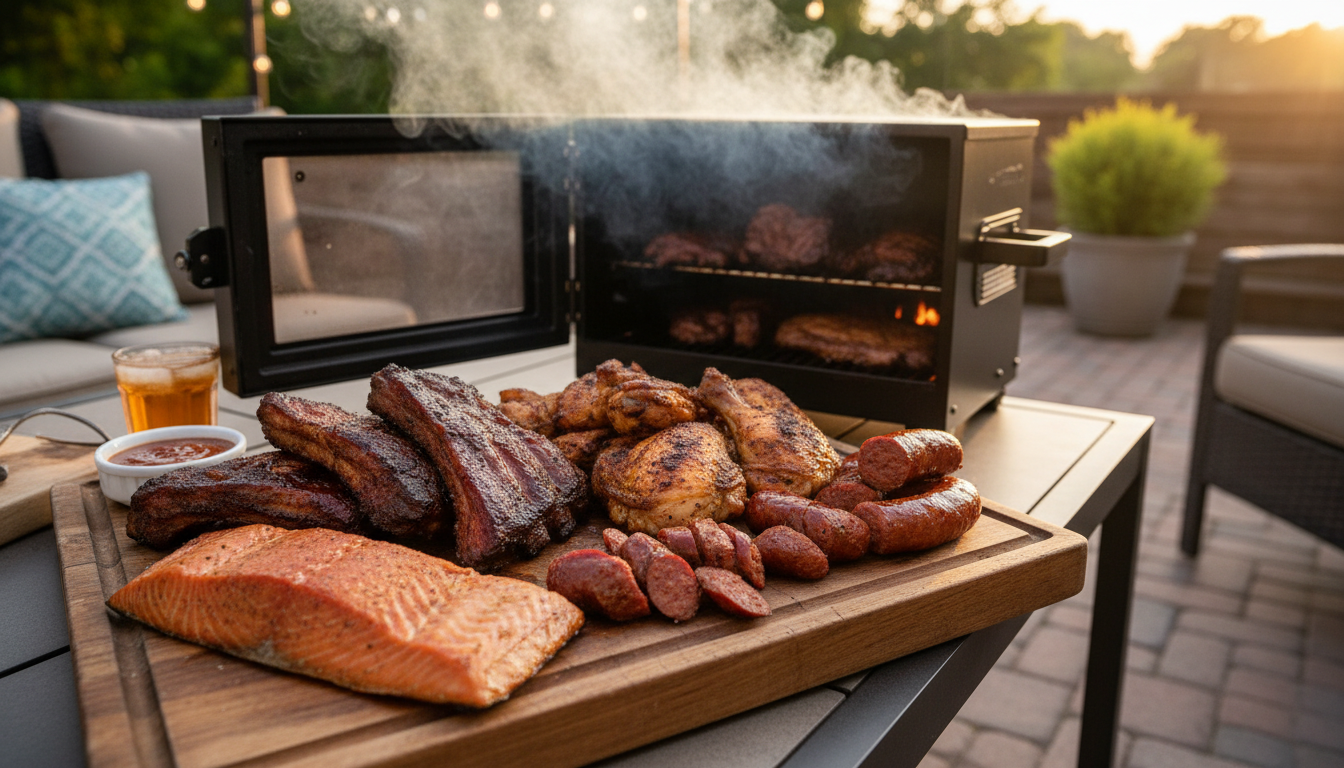
This guide covers the best meats to smoke in electric smoker cabinets, plus a few non-meat favorites. For each one, you get the smoker temperature, an approximate cook time, a wood pairing, and the finish temperature, with the food safety minimums from the US Department of Agriculture (USDA). If you still need a smoker, start with our guide to the best electric smokers for beginners.
Quick Answer: Pork butt, pork ribs, and chicken thighs are the most forgiving meats to smoke in an electric smoker. Salmon, turkey breast, and sausages cook fast and take smoke well. Brisket flat and beef jerky work with a little more attention, and cheese works only if your smoker can hold a cold smoke under about 90°F. Always cook to the USDA safe minimum internal temperature and check with a probe thermometer, not the clock.
Electric Smoker Times and Temps at a Glance
Use this table as a starting point. Times depend on the size of the cut, how full the smoker is, the weather, and how often you open the door. Pull food based on internal temperature, not time.
| Meat | Smoker Temp | Approx. Time | Wood | Finish Temp |
|---|---|---|---|---|
| Pork butt (shoulder) | 225 to 250°F | 1.5 to 2 hours per pound | Hickory, apple | 195 to 205°F (safe at 145°F) |
| Pork ribs | 225 to 250°F | 5 to 6 hours | Hickory, cherry | 195 to 203°F (safe at 145°F) |
| Chicken thighs | 250 to 275°F | 1.5 to 2.5 hours | Apple, cherry | 165°F minimum; 175 to 185°F for texture |
| Chicken wings | 250 to 275°F | 1.5 to 2 hours | Apple, hickory | 165°F minimum |
| Whole chicken | 250 to 275°F | 3 to 4 hours (4 to 5 pounds) | Apple, cherry, pecan | 165°F in breast and thigh |
| Salmon | 180 to 225°F | 1 to 3 hours | Alder, apple | 145°F |
| Turkey breast | 250 to 275°F | 30 to 40 minutes per pound | Apple, pecan, cherry | 165°F |
| Brisket flat | 225 to 250°F | 1 to 1.5 hours per pound | Oak, hickory | 200 to 205°F (safe at 145°F) |
| Raw sausages | 225 to 250°F | 1.5 to 3 hours | Hickory, pecan | 160°F (165°F if poultry) |
| Beef jerky | 160 to 170°F | 4 to 8 hours | Hickory, mesquite | Heat to 160°F, then dry |
| Cheese (cold smoke) | Under about 90°F | 1 to 4 hours | Apple, cherry, pecan | Not cooked; keep cold |
The finish temperatures for pork butt, ribs, and brisket sit far above the safe minimum. You take them higher for tenderness, not safety, because the collagen in those tough cuts needs time above about 190°F to break down. For the official numbers, check the USDA Safe Minimum Internal Temperature Chart.
What You Need
- An electric smoker with a water pan and a wood chip tray or loader
- A probe thermometer, ideally with two probes (one for the meat, one for the cabinet)
- Wood chips matched to the meat (see our wood chips for electric smokers guide)
- Unwaxed butcher paper or heavy duty foil for wrapping large cuts
- A rib rack if you plan to smoke more than one rack of ribs
- Heat resistant gloves and a cutting board with a juice groove
Recommended Gear
You don’t need much beyond the smoker itself. These four items make the biggest difference for the foods in this guide. Prices are approximate and change often.
| Product | Best For | Key Specs | Approx. Price | Link |
|---|---|---|---|---|
| ThermoPro TP20 Wireless Meat Thermometer | Long cooks like pork butt and brisket | Two stainless steel probes, wireless receiver, ±1.8°F accuracy per the manufacturer | Around $40 to $60 | Check price on Amazon |
| Western Premium BBQ Wood Smoking Chips (variety pack) | Trying different woods | Hickory, apple, cherry, and mesquite chips sized for chip trays | Around $15 to $30 | Check price on Amazon |
| Weber Rib Rack | Smoking several racks of ribs at once | Plated steel; holds up to five racks of ribs, per Weber (check your smoker’s interior size first) | Around $22 | Check price on Amazon |
| Pink (Peach) Butcher Paper Roll | Wrapping brisket, pork butt, and ribs | Unwaxed, food grade kraft paper; breathes more than foil | Around $20 to $35 | Check price on Amazon |
For a wider list of tools worth owning, see our roundup of smoker accessories every beginner needs.
How to Smoke Meat in an Electric Smoker
The same basic process works for almost everything on this list. Follow these steps, then use the meat sections below for specific temperatures and times.
- Season ahead. Apply a dry rub to large cuts the night before, or at least an hour ahead. Keep the meat refrigerated until you load it.
- Fill the water pan. Water stabilizes the cabinet temperature and adds humidity. Skip it or keep it low for chicken skin, salmon pellicle, and jerky, where you want drier air.
- Preheat with wood. Set the smoker to your target temperature, add a small handful of chips, and wait until you see thin, steady smoke. Most electric smokers take 20 to 45 minutes to preheat.
- Load the meat and insert a probe. Place the probe in the thickest part, away from bone. Leave space between pieces so smoke and heat can circulate.
- Add chips in small batches. Refill the chip tray about every 45 to 60 minutes for the first few hours. Meat absorbs most of its smoke flavor early in the cook, so you can stop adding wood once the bark sets.
- Keep the door closed. Every peek drops the cabinet temperature and adds time. Trust the probe.
- Wrap if needed. Large cuts often stall around 150 to 170°F as moisture evaporates. Wrapping in butcher paper or foil pushes through the stall faster.
- Pull at the right internal temperature and rest. Rest small items for 5 to 10 minutes and large roasts for 30 to 60 minutes before slicing or pulling.
The Best Meats to Smoke in an Electric Smoker
If you’re wondering what to smoke in an electric smoker first, start near the top of this list and work down. The early entries forgive mistakes; the later ones reward practice.
1. Pork Butt (Pork Shoulder)
Pork butt is the classic first cook. It has plenty of fat and connective tissue, so it stays moist even if your temperature drifts. Smoke it at 225 to 250°F and plan on about 1.5 to 2 hours per pound, so an 8 pound butt can take 12 to 16 hours. Hickory and apple are a reliable pairing.
USDA lists whole cuts of pork as safe at 145°F with a 3 minute rest, but sliced or pulled pork needs 195 to 205°F to turn tender. Wrap it at the stall if you want to save time, and rest it at least 30 minutes before pulling.
2. Pork Ribs
Baby back ribs usually take about 5 hours at 225 to 250°F, and spare ribs or St. Louis cut ribs take closer to 6. Hickory gives a traditional flavor, and cherry adds a deep red color. Remove the membrane from the bone side before seasoning.
Ribs are safe at 145°F, but they get tender between about 195 and 203°F. Because ribs are thin, a probe can be hard to place, so many cooks also use the bend test: lift the rack with tongs, and if the surface cracks and the rack bends easily, they’re done. A rib rack helps you fit more than one rack in a narrow electric cabinet.
3. Chicken Thighs and Wings
Chicken thighs are cheap, forgiving, and done in an afternoon. Run the smoker at 250 to 275°F, its highest setting on many models, for 1.5 to 2.5 hours. Wings take about 1.5 to 2 hours at the same temperature. Apple and cherry keep the smoke mild, which suits poultry.
All poultry is safe at 165°F. Thighs taste better at 175 to 185°F, when the connective tissue softens. The main weakness of an electric smoker here is skin: low heat and high humidity leave it rubbery. Skip the water pan, pat the skin dry, and finish wings or thighs on a hot grill or under the oven broiler for a few minutes to crisp them.
4. Whole Chicken
A 4 to 5 pound chicken takes about 3 to 4 hours at 250 to 275°F. Spatchcocking (cutting out the backbone and flattening the bird) cuts the time and helps it cook evenly. Use apple, cherry, or pecan.
Check the temperature in both the thickest part of the breast and the thigh. Both need to reach 165°F. As with thighs, finish it over high heat if you want crisp skin.
5. Salmon
Salmon is one of the best foods for an electric smoker because it needs gentle, steady heat, which is exactly what these smokers do well. Brine or dry cure the fillets, rinse, and let them air dry in the fridge until the surface turns tacky. That tacky layer, called a pellicle, helps smoke stick.
Smoke at 180 to 225°F for 1 to 3 hours, depending on thickness. Alder is the traditional wood for salmon, and apple works well too. USDA lists fish as safe at 145°F, or when the flesh turns opaque and flakes easily with a fork.
6. Turkey Breast
A whole turkey can overwhelm a small electric smoker, but a bone-in or boneless turkey breast fits easily. Smoke it at 250 to 275°F for about 30 to 40 minutes per pound. Apple, pecan, and cherry give it a clean, slightly sweet flavor.
Turkey is safe at 165°F. Lean breast meat dries out quickly past that point, so pull it promptly and rest it for 15 to 20 minutes. A brine the night before gives you more margin for error.
7. Brisket Flat
A full packer brisket often won’t fit on electric smoker racks, but the flat (the leaner, rectangular half) usually does. Smoke it at 225 to 250°F and plan on 1 to 1.5 hours per pound. Oak and hickory are the standard choices; use mesquite sparingly because it turns bitter in long cooks.
Beef is safe at 145°F, but brisket needs 200 to 205°F, and a probe that slides in with almost no resistance, to turn tender. The flat has less fat than the point, so wrap it in butcher paper once the bark looks set, usually around 160 to 170°F, and rest it for at least an hour before slicing against the grain.
8. Sausages
Fresh bratwurst, Italian sausage, and other raw links smoke in 1.5 to 3 hours at 225 to 250°F. Hickory and pecan pair well. Precooked sausages, like kielbasa, only need an hour or so to pick up smoke and heat through.
Raw sausages count as ground meat, so USDA lists them as safe at 160°F. Sausages made from chicken or turkey need 165°F. Keep the temperature moderate so the casings don’t split.
9. Beef Jerky
Jerky works well in electric smokers that can hold a low temperature. Slice lean beef (eye of round or top round) about a quarter inch thick, marinate it, and smoke at 160 to 170°F for 4 to 8 hours, until the strips bend and crack without snapping. Hickory and mesquite give it a bold flavor.
USDA recommends heating jerky meat to 160°F (165°F for poultry) before dehydrating, because the low drying temperature alone may not destroy bacteria. Our step-by-step guide on how to make beef jerky in a smoker covers slicing, marinades, and how to handle this safety step.
10. Cheese (Cold Smoking Only)
Smoked cheese is popular, but it comes with a big caveat. Cheese starts to sweat and melt around 90°F, and most electric smokers can’t hold a temperature that low with the heating element running. You need a true cold smoke: the element off, smoke from a separate source such as a cold smoker attachment or a pellet tube, and a cool day (ideally under 60°F outside). A tray of ice on the rack below helps.
Use firm or semi-hard cheeses like cheddar, gouda, or pepper jack, cut into blocks. Smoke them for 1 to 4 hours with apple, cherry, or pecan, then vacuum seal and refrigerate for at least a few days so the harsh smoke flavor mellows. Never cold smoke raw meat this way, because it never reaches a safe temperature.
Electric Smoker Recipes for Beginners: Where to Start
If you just bought your first smoker, cook in this order: chicken thighs first (fast feedback, low cost), then pork butt (long but forgiving), then ribs. Once those feel easy, move on to salmon, turkey breast, and brisket flat. Keep a short notebook of each cook with the weight, smoker temperature, wood, and total time. After three or four cooks, you’ll know how your specific smoker behaves.
Food Safety Notes
- Use a thermometer every time. Color, juices, and cook time don’t tell you whether meat is safe.
- Know the USDA minimums. Whole cuts of beef and pork: 145°F with a 3 minute rest. Ground meat and sausage: 160°F. All poultry: 165°F. Fish: 145°F.
- Avoid very low cabinet temperatures for large raw cuts. Smoking a roast or whole bird below about 225°F can keep it in the bacterial danger zone of 40 to 140°F for too long.
- Keep raw meat cold until it goes in. Don’t leave it on the counter while the smoker preheats.
- Refrigerate leftovers within 2 hours. Break large cuts into smaller portions so they cool quickly.
Related Guides
- Electric Smoker vs Charcoal Smoker: Flavor, Effort, and Cost Compared
- Propane vs Electric Smoker: Pros, Cons, and Which to Choose
- Pellet Smoker vs Electric Smoker: Which Should You Buy?
- Best Smoker Accessory Gifts for Pitmasters (2026 Holiday Guide)
Frequently Asked Questions
What is the easiest meat to smoke in an electric smoker?
Pork butt is the most forgiving because its fat and collagen keep it moist through temperature swings. Chicken thighs are the easiest quick cook, usually done in about 2 hours.
Do I need to soak wood chips for an electric smoker?
Some smoker manuals call for dry chips and others allow soaking, so follow yours. Soaked chips steam before they smoke, which mostly delays the smoke rather than extending it. Our electric smoker wood chips guide covers this in more detail.
Why doesn’t my electric smoker give a smoke ring?
A smoke ring forms from gases released by burning wood or charcoal, and an electric smoker smolders a small amount of wood, so the ring is usually faint. The meat still tastes smoky. The ring is cosmetic and doesn’t affect flavor much.
Can I smoke frozen meat in an electric smoker?
Thaw meat in the refrigerator first. Frozen meat takes much longer to pass through the danger zone, absorbs smoke unevenly, and makes cook times hard to predict.
How often should I add wood chips?
Add a small handful about every 45 to 60 minutes for the first 2 to 4 hours. After that, the bark has formed and extra smoke adds little flavor, so you can let the smoker finish on heat alone.
Final Thoughts
Electric smokers do their best work with fatty pork, poultry, fish, and sausages, where steady low heat matters more than heavy smoke. Start with pork butt or chicken thighs, use a reliable probe thermometer, and always cook to at least the USDA safe minimum. Once you have a few cooks behind you, brisket flat, jerky, and even cold smoked cheese are well within reach.
Leave a Reply